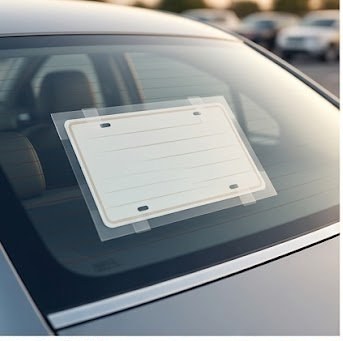
A paper temporary license plate in the rear window is the most common form in most states.
The Simple Answer
A temporary license plate — also called a temp tag, drive-out tag, trip permit, or temporary registration — is a short-term document that allows you to legally drive a vehicle on public roads while the permanent license plates and registration are being processed.
When you buy a vehicle, you can't always walk out of the dealership with permanent plates in hand. Title transfers take time, taxes need to be assessed, and the state DMV needs to process your registration. A temp tag bridges that gap legally.
Who Issues Temporary License Plates?
There are two primary sources of temp tags in the United States:
- Licensed dealerships — When you purchase from a dealer, they issue a temp tag directly. Dealers are authorized by the state to do this as part of the sale process. In most states, the dealer also submits your title and registration paperwork to the state on your behalf.
- State DMV or county offices — For private vehicle sales (person-to-person), you'll generally need to visit your local DMV, county clerk, or equivalent agency to obtain a temporary permit before you can legally drive the car home.
A handwritten note in the window, a photocopy of someone else's registration, or a seller's old expired plate are not legal temp tags. Only an officially issued temporary registration from a licensed dealer or state agency is valid. In many states, fraudulent temp tags have become a serious problem — which is why Texas moved to metal temp plates in 2025.
What Does a Temp Tag Look Like?
Temp tags vary significantly by state in both format and material:
- Paper/cardstock — Still used in most states. Printed with a unique identifier, expiration date, and the state seal. Displayed in the rear window or license plate area.
- Metal plates — Texas, Georgia, Michigan, and a growing number of states now require metal temporary plates to combat fraud. These look similar to permanent plates but are marked "TEMP" or have a visible expiration indicator.
- Digital/electronic — A small number of states allow digital temp tags that are verified through law enforcement databases. Iowa's eTags are one example.
How Long Is a Temp Tag Valid?
This varies enormously by state — from as few as 5 days (Rhode Island) to as many as 90 days (California, Illinois, New York). The most common window is 30 days.
The window is counted from the date printed on the tag — not the date you actually start driving the car. If a dealer issues a tag and you pick up the car two days later, those two days still count against your window.
See our full state-by-state table or use the expiration calculator to find your exact deadline.
What Can You Do With a Temp Tag?
A valid temporary license plate allows you to:
- Drive the vehicle on public roads within the issuing state
- Drive through other states while traveling (most states honor valid out-of-state temp tags)
- Complete required inspections or emissions tests if needed for registration
- Purchase insurance (insurance is usually required before the tag is issued, not after)
A temp tag does not allow you to:
- Drive after the expiration date printed on the tag
- Transfer the tag to another vehicle
- Use the tag as a substitute for permanent registration indefinitely
Dealer vs. Private Sale Temp Tags
The biggest practical difference between dealer and private sale temp tags is who's responsible for obtaining them:
- Dealer purchase: The dealer handles everything. They issue the temp tag at time of sale and submit your title/registration paperwork. If the plates don't arrive in time, the dealer should issue a new tag — that's their responsibility.
- Private sale: You're responsible. The seller may not legally issue you a temp tag — you typically need to visit the DMV yourself with the signed title, bill of sale, and proof of insurance to get a transit permit.
Read our full private sale temp tag guide for state-by-state details.
What Happens When a Temp Tag Expires?
Driving with an expired temp tag is a moving violation in most states. The consequences typically include fines, and in some states, vehicle impoundment. More importantly, if you're in an accident while driving on an expired temp tag, your insurance company may complicate or deny the claim.
Read our full guide on what to do when your temp tag expires.
The moment you receive your temp tag, count forward to the expiration date and put it in your calendar. If you buy from a dealer, call them at the halfway point to confirm your plates are on track. Don't wait until the last day to discover there's a problem.
Frequently Asked Questions
TOURSUIT Car Registration & Insurance Card Holder — #1 Best Seller
Every guide on this site says to keep your bill of sale, insurance card, title copy, and temp tag in the vehicle at all times. This #1 Best Seller glovebox organizer has 4.8★ from 11,000+ buyers — it holds everything flat, protected from rain that can make a paper temp tag unreadable and legally void.
🛒 View on Amazon